

2026 Predictions
2026 Predictions

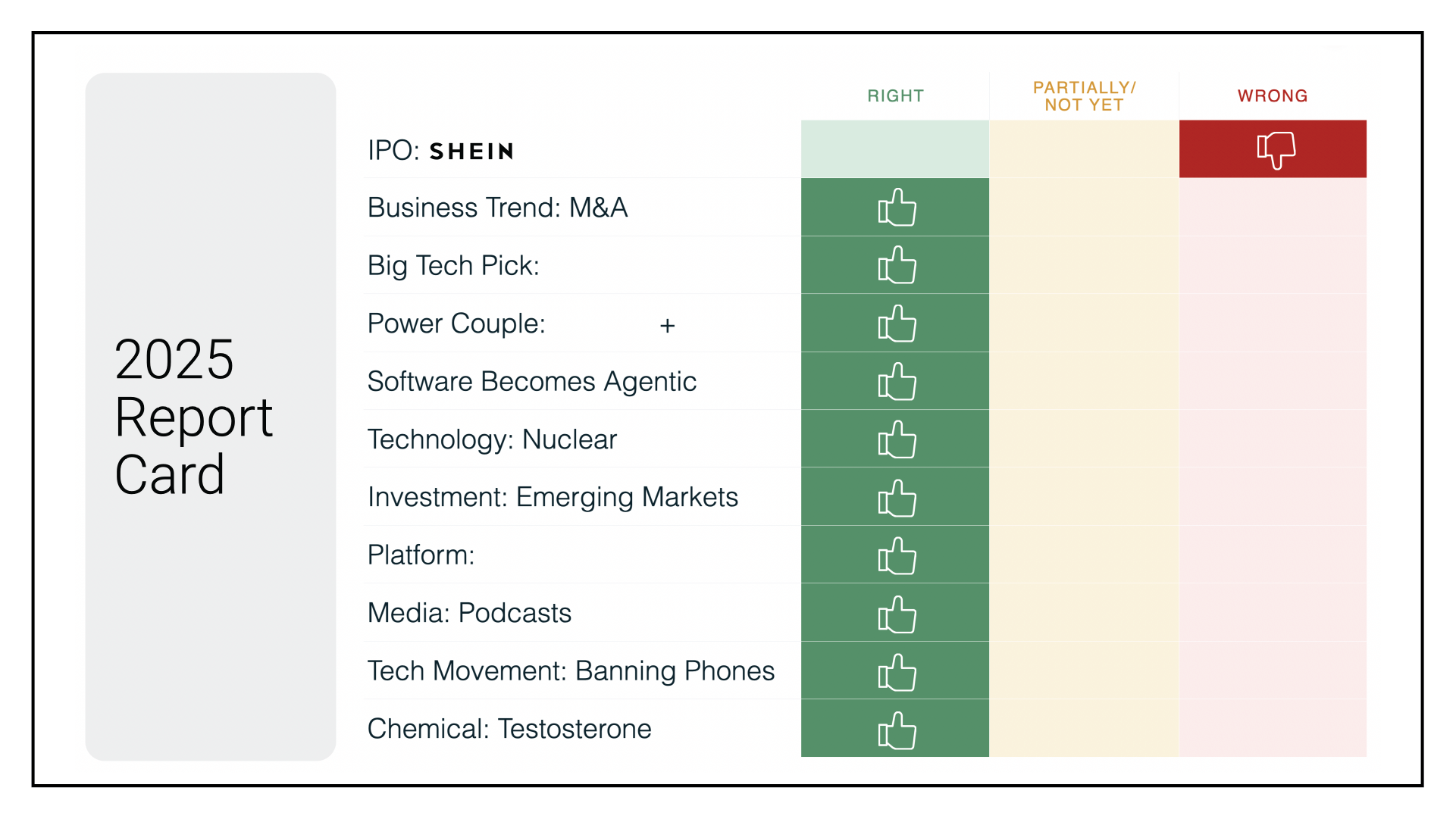
Every year, we make predictions. Our missives on 2025, made in October ’24, registered the most direct hits since we first pulled out our Ouija board a decade ago. Our objective isn’t to be right — though that helps — but to inspire a conversation that crafts better solutions. OK, enough of that. We begin with our 2025 report card, followed by our 2026 predictions.
2026 Predictions
AI Stocks Correct
The question isn’t when the AI bubble will burst, but what the catalyst will be. A: China. Trump has changed U.S. tariffs on China 17 times this year. They’re tired of having a major trading partner with sclerotic decision-making and the demeanor of a raccoon on meth. Since 2019, China has decreased its share of exports to the U.S. from 17% to 10%. Meanwhile, China’s global exports are up 40%, while imports are flat. Trump’s tariff policy is the definition of stupid: hurt others while hurting yourself. It has not inspired an increase in domestic manufacturing, but a decrease in exports, as reciprocal tariffs take effect, and a rerouting of the global supply chain around the U.S. “Higher prices, lower growth” makes for a lousy bumper sticker.
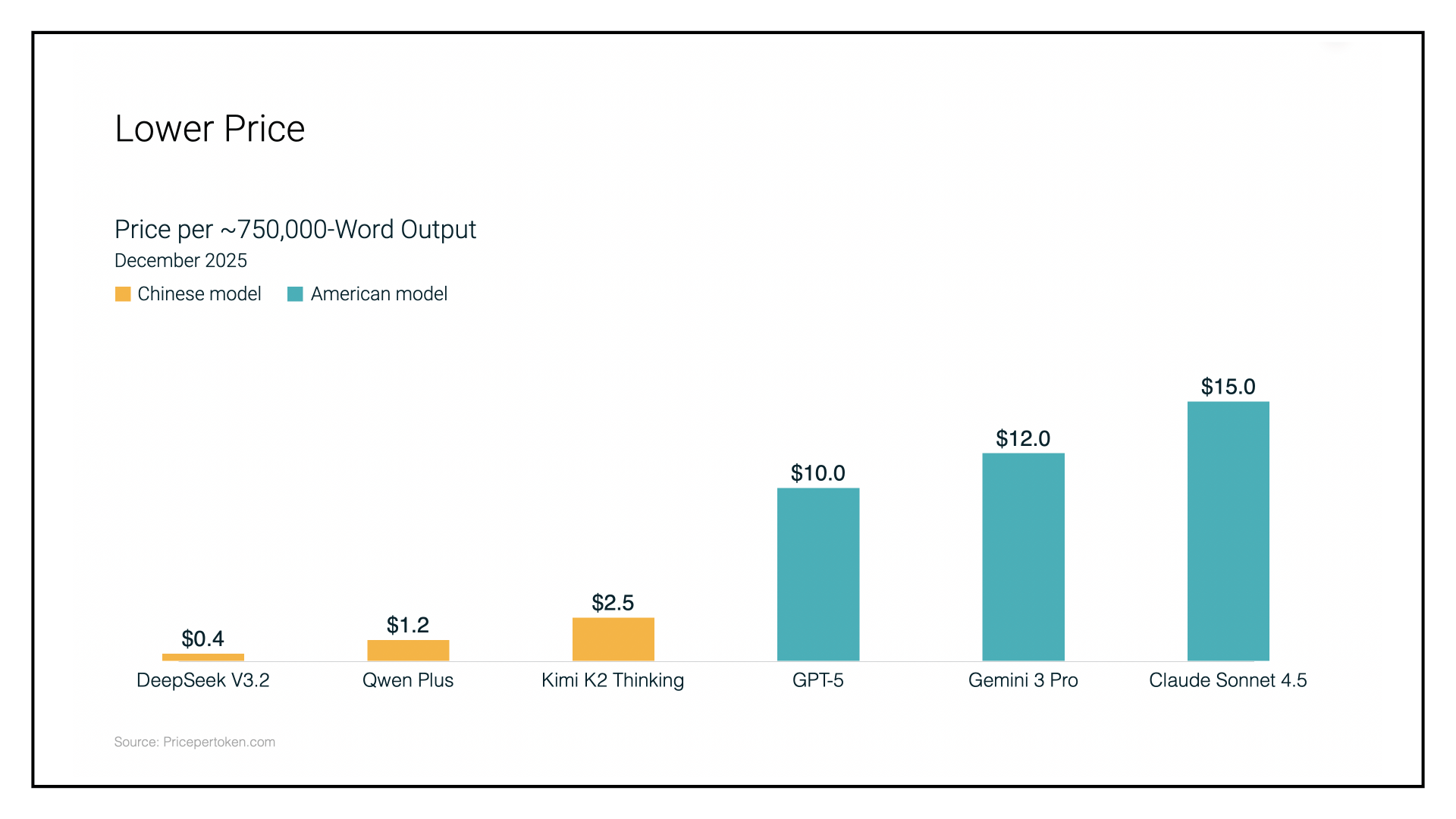
If I were advising Xi, I’d counsel him to go for the jugular by engaging in AI-dumping, a repeat of their aughts steel-dumping playbook. It’s already underway — and working. Eighty percent of a16z startups use open-source Chinese models. Same story at Airbnb. China is registering similar or better performance as the American LLM leaders, but with a fraction of the capex. Flooding the market with competitive, less-expensive AI models will put pressure on the margins and pricing power of the Mag 7, taking down a frighteningly concentrated S&P and likely sending the U.S., possibly the globe, into recession.
The Data Center Bubble Bursts
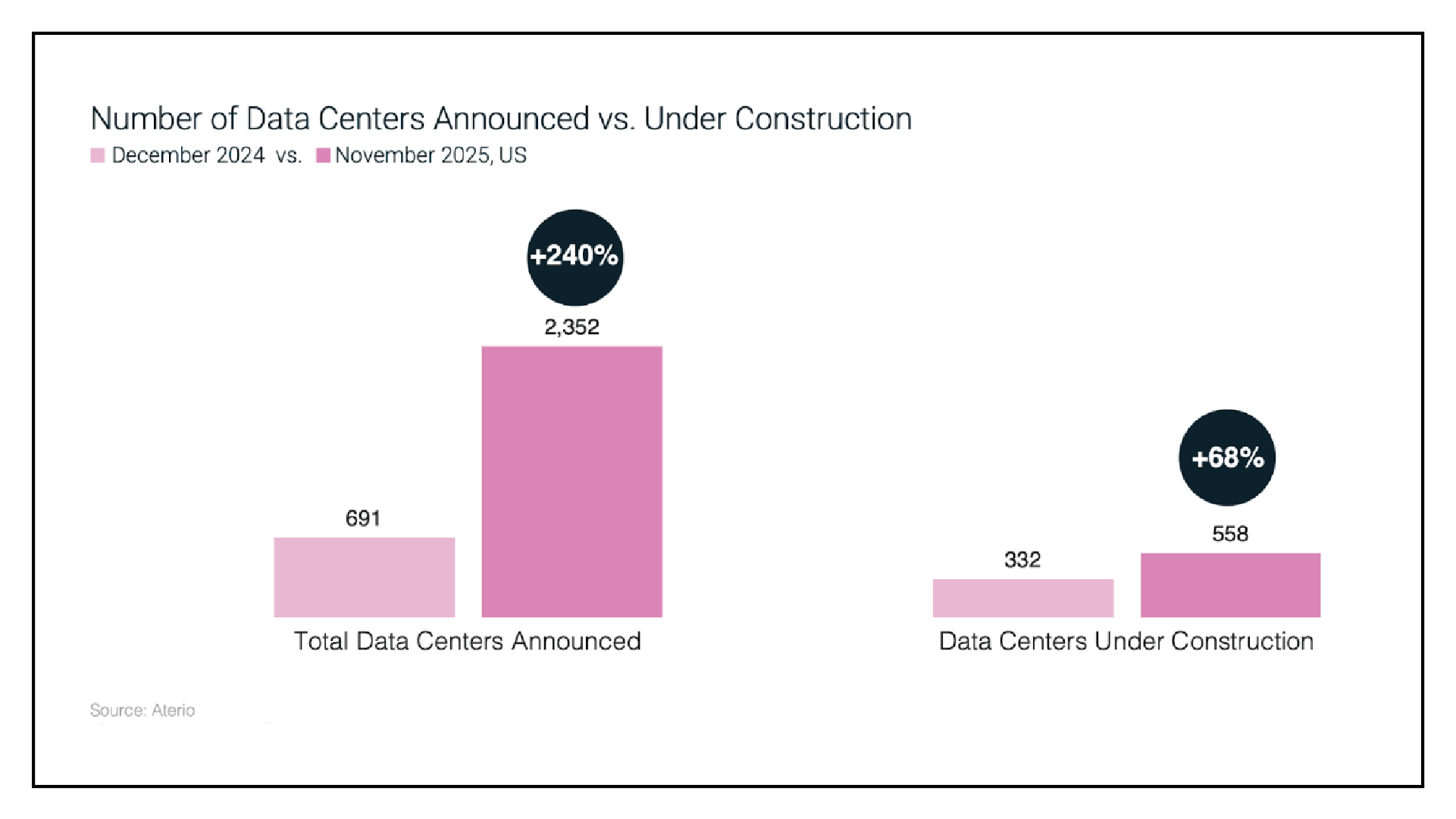
OpenAI is promising Oracle $300 billion — money it doesn’t have — for infrastructure Oracle hasn’t built. We can’t see the actual contract, but this is BS. The greatest AI hallucination yet is the assumption that in the next few years we’re going to build anywhere near the required grid and power capacity. OpenAI needs 20% of current U.S. electric capacity — equivalent to 250 nuclear power plants — at a cost of $10 trillion. There’s a five- to eight-year wait to connect a new data center to the grid. Meanwhile, China has more than twice America’s energy capacity at half the cost. Second greatest AI hallucination? Job creation. The average number of full-time employees at a data center is equivalent to the number of people working at two Applebee’s.
Nvidia & OpenAI Duopoly Comes Under Siege
Based on its valuation, Nvidia is telling the market it will add an additional $800 billion in revenue over the next five years — equivalent to the combined revenue of Apple, IBM, Meta, and Tesla. OpenAI, which has $20 billion in annual revenue, is projecting it’ll add $180 billion in revenue over the same period — equivalent to the combined revenue of Disney, Fox, the New York Times, Paramount, and WBD. Also, OpenAI’s $1.4 trillion in spending commitments exceeds Argentina’s national debt.
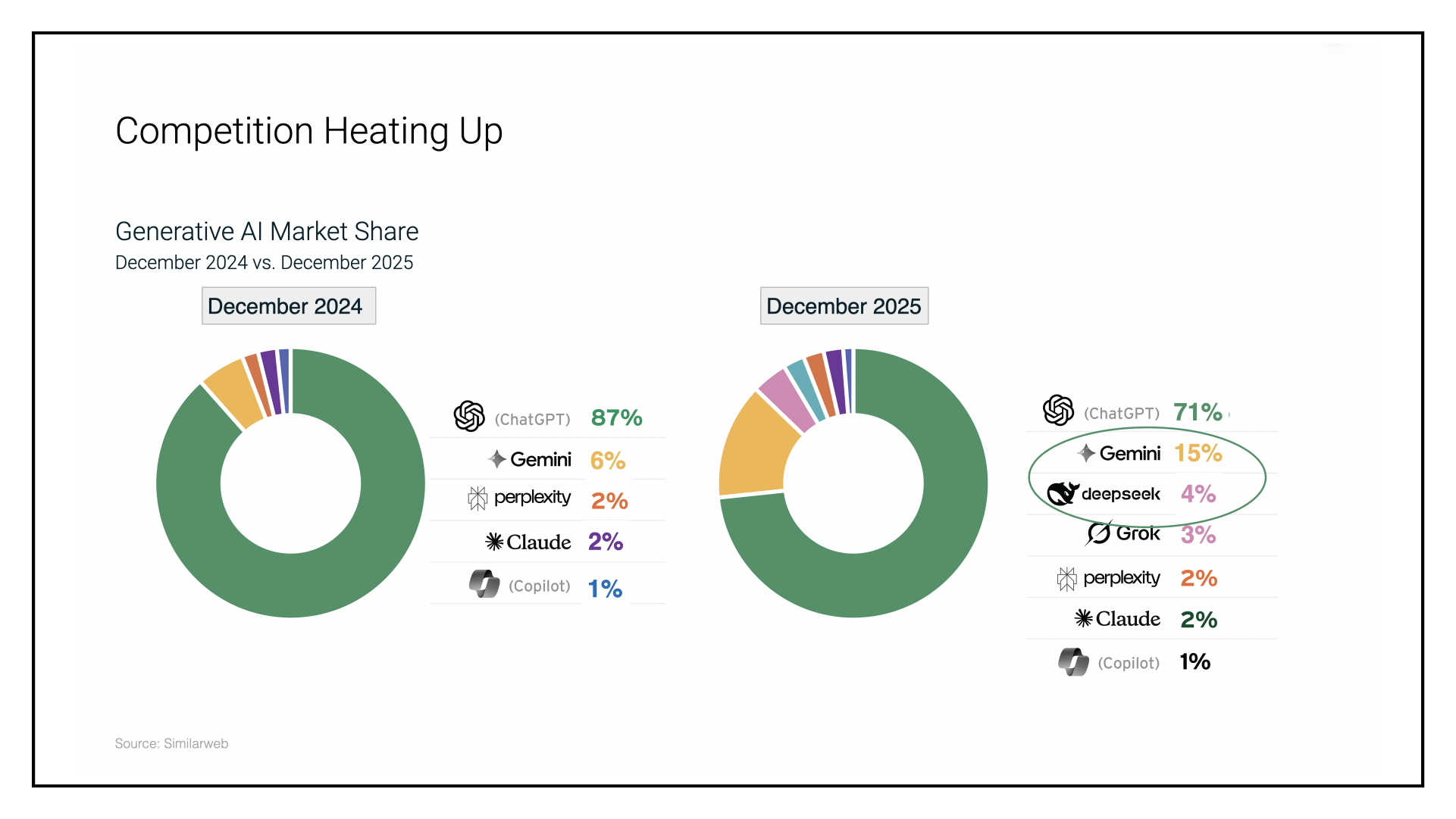
Meanwhile, the competition is heating up. China is putting out comparable models at a fraction of the price (see above), Anthropic has captured the lead for enterprise users, and, as I predicted last year, the empire (Alphabet) is striking back. Gemini summaries are improving, and arguably the greatest concentration of AI talent resides at Alphabet. OpenAI could be our era’s Netscape, i.e., the disruptor that enjoys a moment in the spotlight before being eclipsed by an incumbent.
Big Tech Pick: Amazon
I’m bullish on Amazon, even though it underperformed the Mag 7 this year. The collision of AI and robotics is the Champagne and cocaine cocktail fueling Amazon’s retail margin expansion, catalyzing a 2x increase in the gross merchandise value of its largest business (retail) by 2033, without adding any human workers. Just as Ford’s assembly line slashed automotive production time by 88%, Amazon’s robotics investments have reduced the time from click to ship by 78%. The rest of the Mag 7 capitalizes on the elevation of information (bits) over objects (atoms), while Amazon is leveraging bits to move atoms faster and cheaper. Notably, the market hasn’t priced this in yet; in 2025 Amazon stock traded at a P/E ratio of 33, compared to its historic average of 58. The greatest accretion in shareholder value from AI will be at companies that leverage others’ AI. Specifically, Amazon. 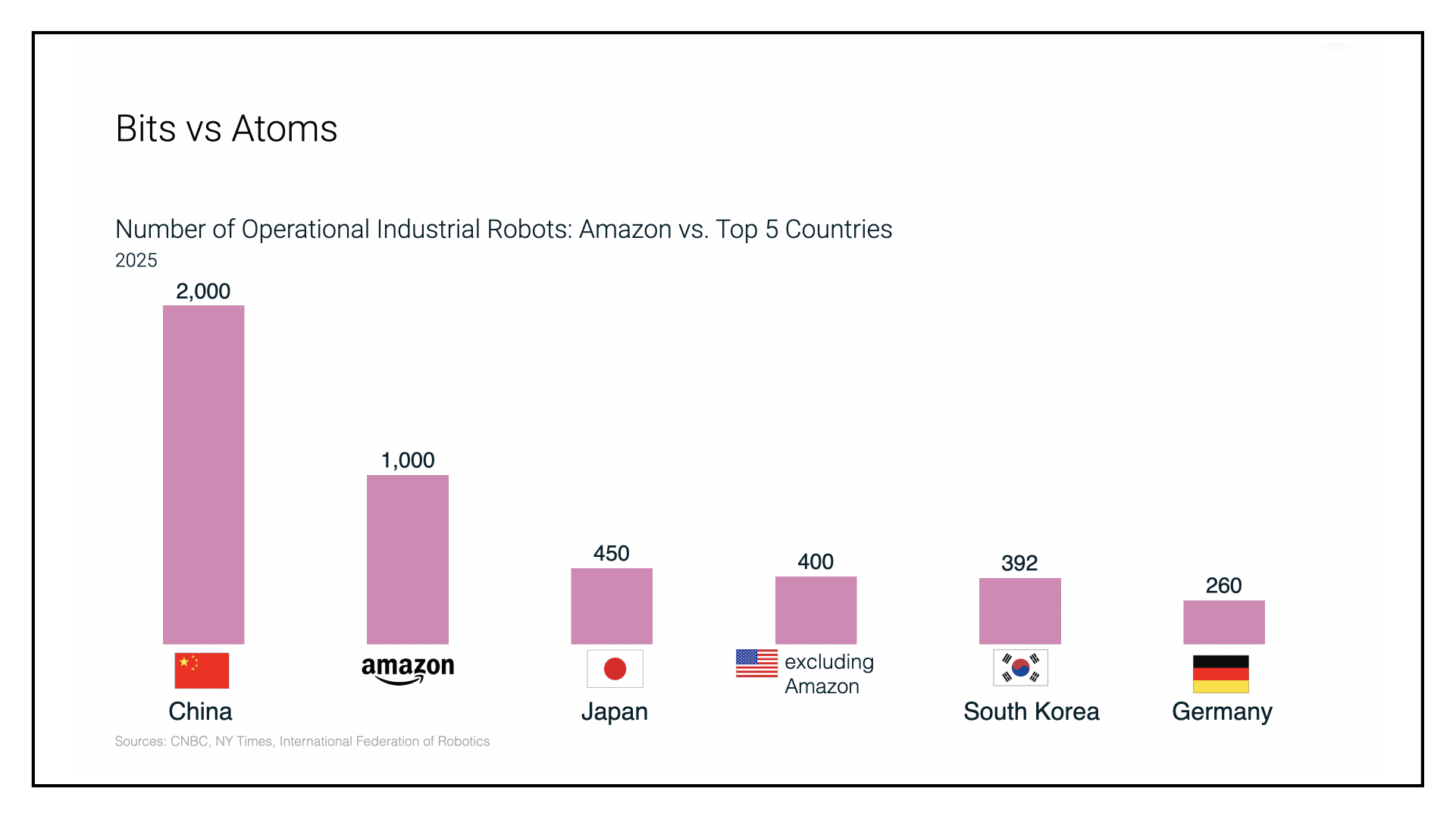
Space: The Next Big ‘Thing’
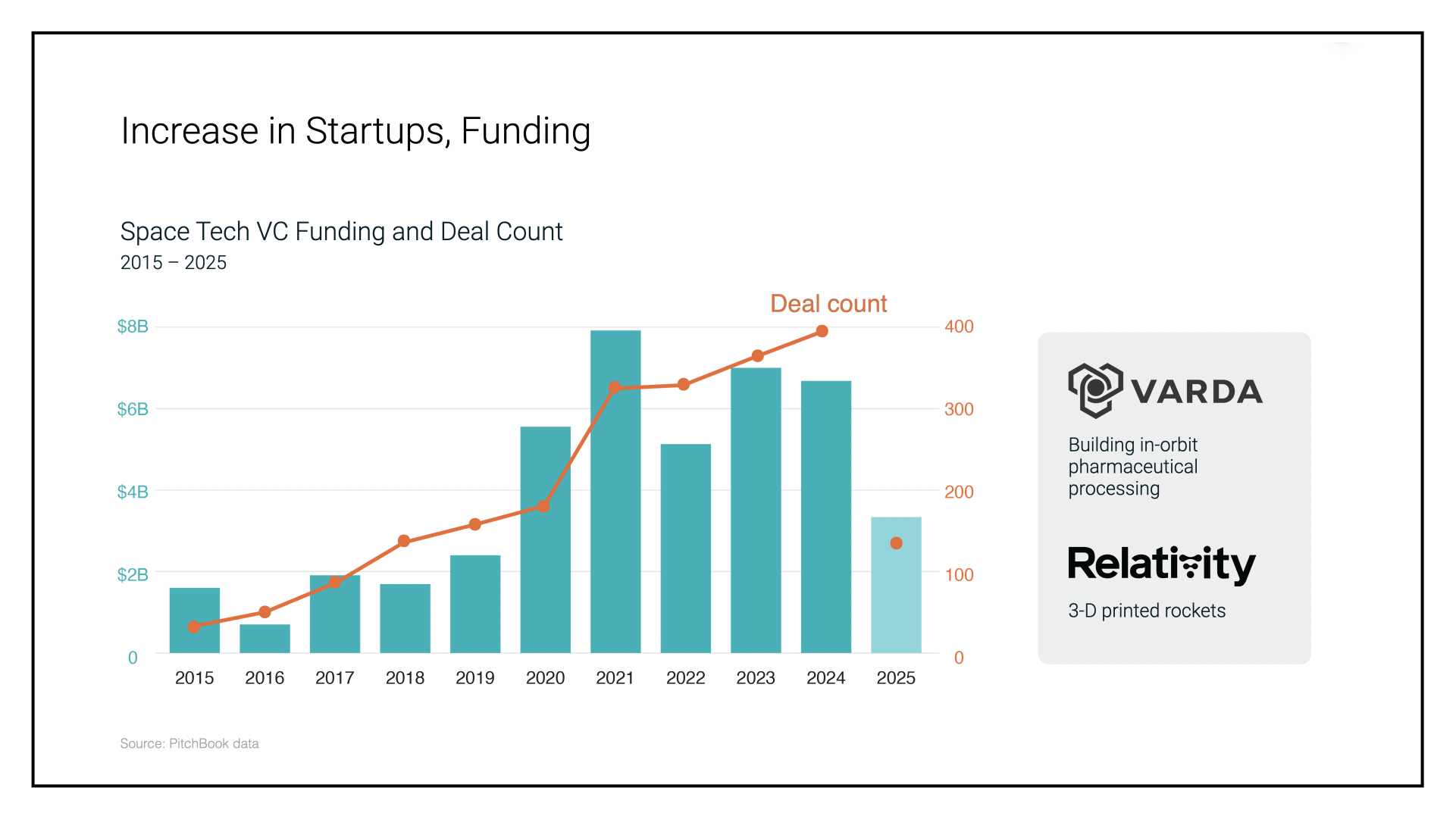
When technology gets cheaper, startups form, the ecosystem attracts cheaper and cheaper capital, which spurs innovation, and so on and so on. The cost of the personal computer decreased 58% during the 15-year dot-com boom, and U.S. IT spending increased 200%. The same pattern is happening now with AI: The cost of GPU operations has fallen by 74%, while global AI funding has risen by 280%. The key metric for space? Over the past 15 years, the cost to get a kilogram of payload into orbit is down 89%, while private U.S. space investment jumped 6x.
SpaceX is dominant, registering 84% of U.S. space launches in 2024, up from 18% in 2008. If I were running investor relations, I’d position SpaceX as follows: Google owns 93% of information with search, Meta controls two-thirds of social connection, Amazon has half of e-commerce. SpaceX controls 90% of everything else in the universe. Everything is a subset of the addressable market that is space.
Best Investment (You Don’t Have Access to): TikTok U.S.
TikTok’s success underscores the biggest mistake marketers make, believing choice is a good thing. It isn’t. Consumers spend five days per year deciding what to watch on Netflix. TikTok has only one channel, and it’s the best one you’re ever going to watch. Forty-three percent of Americans 18 to 29 get their news from TikTok. We also spend more time, on average, with TikTok (54 minutes per day) than with friends (35 minutes). When I say TikTok is our new best friend, I mean CCP spy. But I digress.
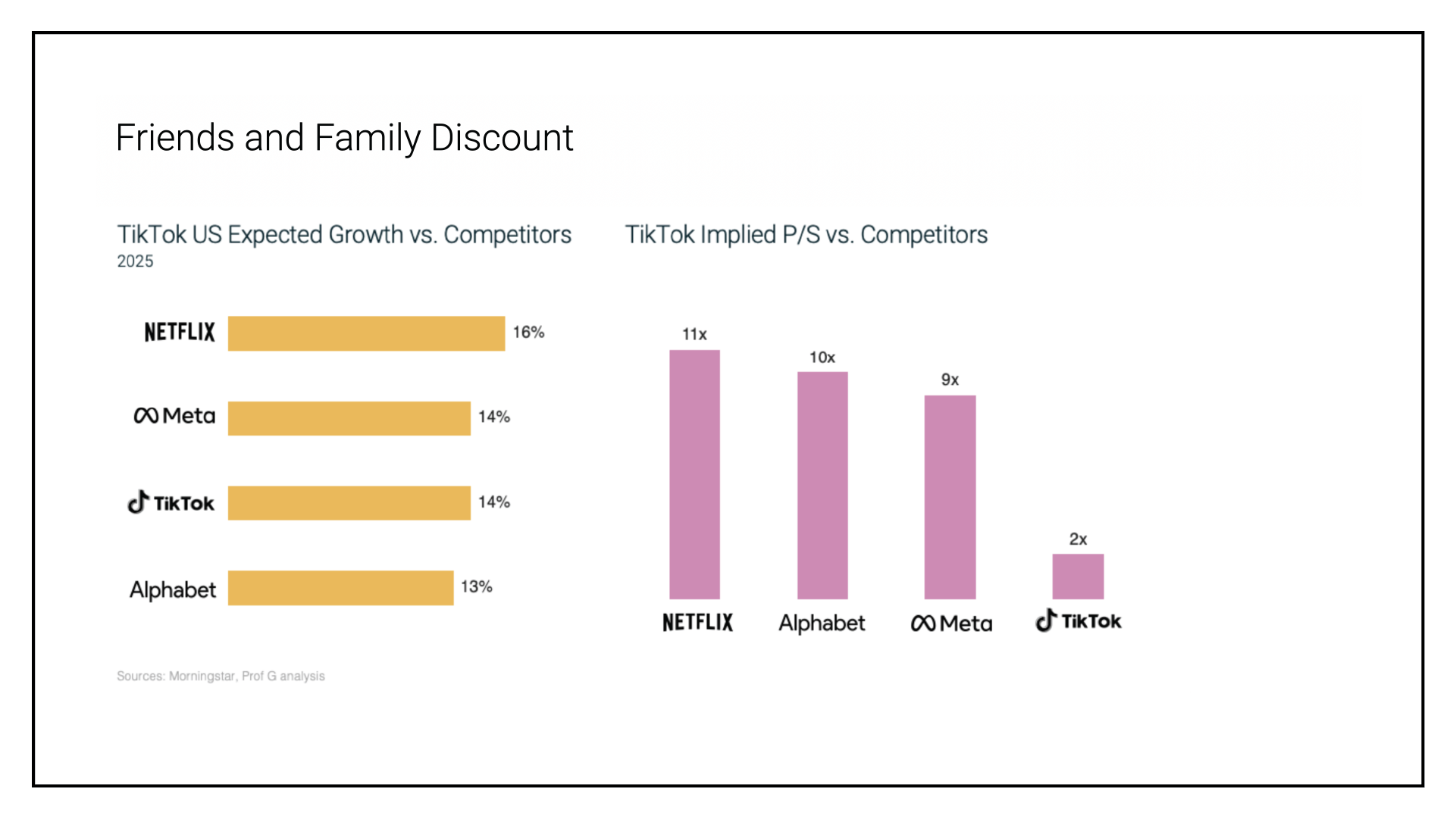
The math on TikTok’s forced sale doesn’t math, though, unless you’re one of the president’s cronies. TikTok’s U.S. ad revenue was $12 billion in 2024. Applying a 10x P/S ratio, its U.S. business has an implied value of $120 billion. Accounting for a revenue share with China, Trump’s deal values U.S. TikTok at $28 billion. But I’m a Democrat, so I’m not allowed to invest. These insider deals reduce people’s faith in the market, raising the cost of capital for everyone. U.S. economic policy could best be described as corrupt, but stupid.
Short-Form Video and AI Meteors Strike Hollywood
Hollywood is the new Detroit, but with better weather. For creatives, the return on human capital is inversely correlated to the size of the screen. Seventy-eight percent of Americans age 10 to 24 watch TV and movies on YouTube and TikTok. The Kids Diana Show on YouTube averages between 2 and 10 minutes per episode — perfectly calibrated for young people’s shrinking attention spans. The show registers 137 million subscribers; Disney+ has 128 million subscribers.
The other meteor headed for Hollywood is AI. What AI will do to Hollywood is what podcasting is doing to TV. The Late Show with Stephen Colbert employs 200 people, costs $100 million, and makes $60 million. When Colbert shifts to podcasting, he’ll take eight people with him and make just $20 million, but it’ll only cost $5 million to produce. The means of production are being arbitraged. There will be outrage from the creative community, who believe they’re too precious to face disruption. But consumers, much less the Ellisons, don’t give a shit.
Waymo Dominates
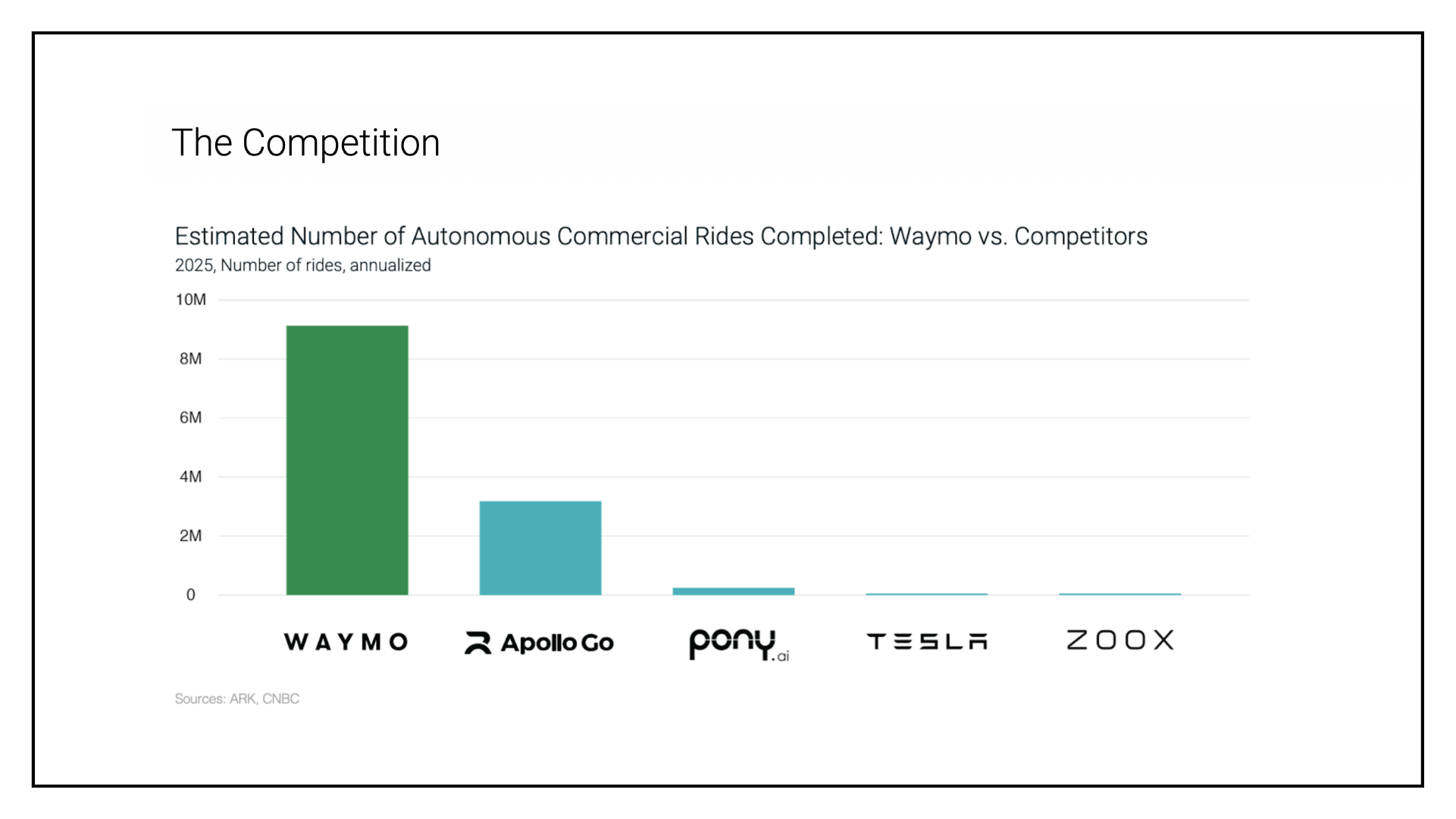
Automobile deaths kill 40,000 Americans annually — equivalent to prostate cancer, Parkinson’s disease, and breast cancer combined. Autonomous driving may be the equivalent of a cure for (some types of) cancer. A study evaluating tens of millions of miles driven by Waymo found that its autonomous cars were involved in 96% fewer vehicle-to-vehicle crashes, resulting in 90% fewer bodily-injury claims, and 92% fewer pedestrian injuries compared to cars driven by humans.
Waymo went from 38,000 paid rides per month in 2023 to 1 million just two years later. The company is lapping the competition, logging 100 million fully autonomous miles, compared to Tesla’s 1.25 million miles with human safety monitors. The second horse to watch is Uber. It’s technology-agnostic, choosing to pour capital into the consumer experience. As former CEO Travis Kalanick said, the most expensive part of the business is the person in the driver’s seat.
Humanoid Robots = Self-Driving Cars of 2015
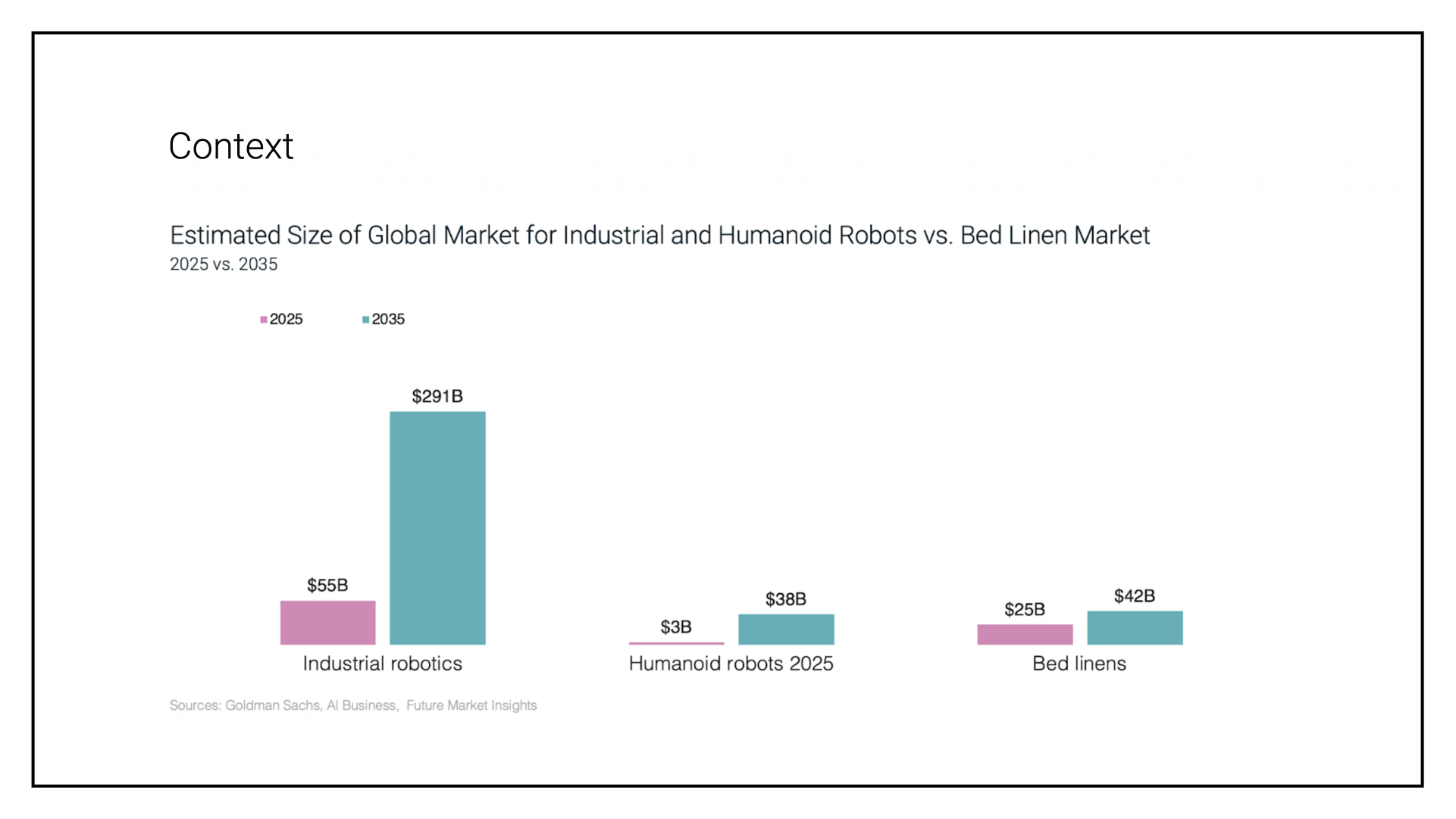
Similar to self-driving cars circa 2015, humanoid robots are another Musk weapon of mass distraction designed to draw attention away from the fact that Tesla is a car company. Tesla’s market cap per car sold is 77x what it is for GM and Ford, 28x Toyota, and 24x BYD. According to Musk, Tesla’s Optimus robot will be an “infinite money glitch” that ends poverty and performs surgery. It’s as if he’s on ketamine. According to MIT robotics professor emeritus Rodney Brooks, “We will have plenty of humanoid robots 15 years from now, but they will look like neither today’s humanoid robots nor humans.” The current / future opportunities aren’t robots that mimic humans, but robots that augment / replace humans at industrial scale.
Vice of the Year: Prediction Markets
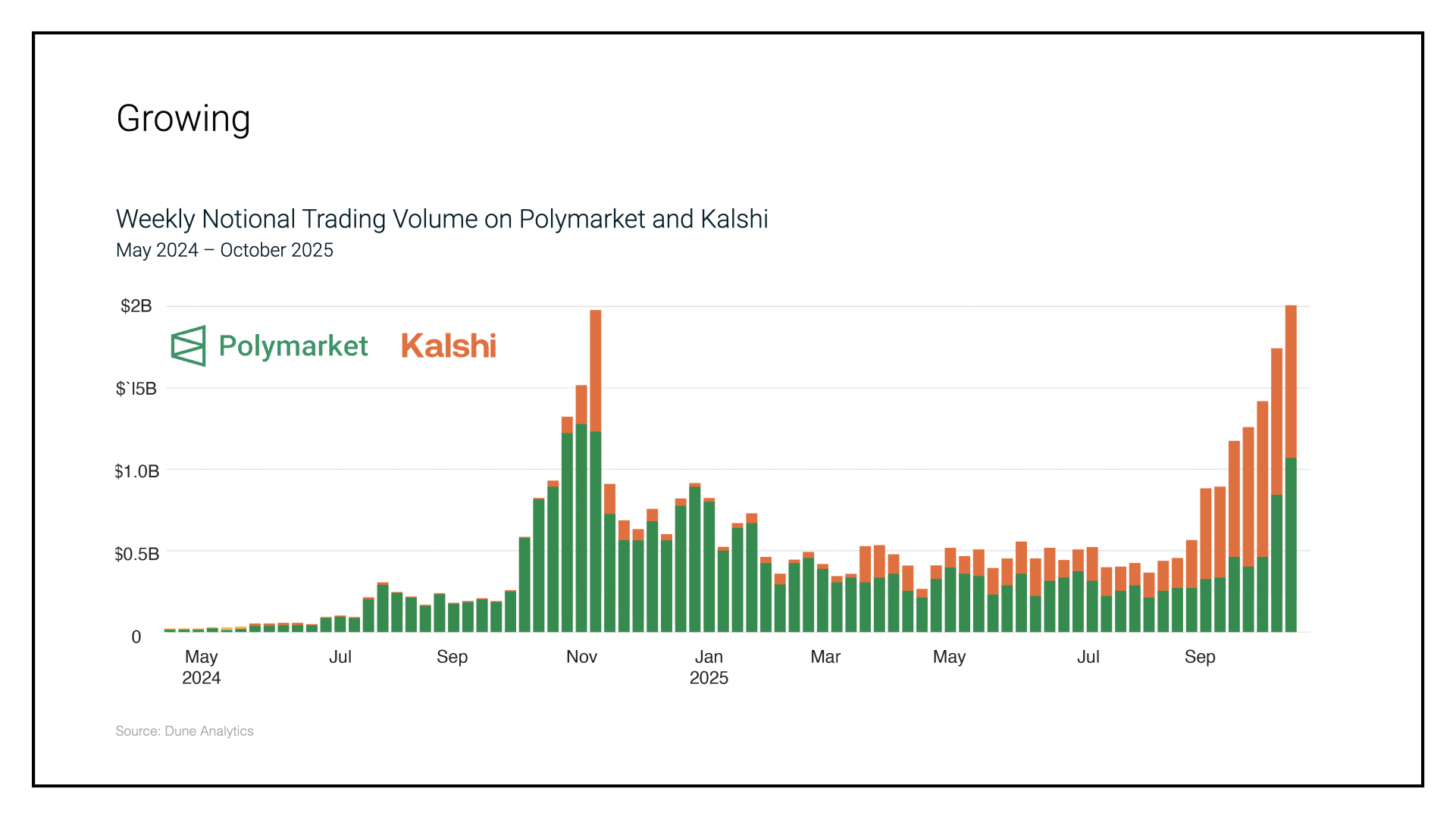
Prediction markets leverage the wisdom of crowds. In turn, crowds supercharged by integrations with news brands create a virtual self-propulsion marketing machine. Participants may be deluded into believing they’re engaging in an intellectual pursuit when they bet on an election’s outcome, but it’s gambling, just more fun and interesting. What GLP-1s did to fast food, prediction markets are doing to the gaming business. Aristocrat Leisure, Caesars Entertainment, DraftKings, Evolution Gaming, Flutter Entertainment, and MGM Resorts are down 22% YTD, on average. Las Vegas tourism is down 8%. Nobody will be in Vegas once Vegas is on everyone’s phone.
The externalities are huge. Half the men in the U.S. between 18 and 49 have a sports betting account. Among sports bettors, 23% say they’re addicted; the share jumps to 37% for Gen-Z. One in five people with a gambling addiction attempt suicide. Personal bankruptcy filings increased by 28% in states that legalized sports betting after a 2018 Supreme Court ruling. There are also civic externalities, as prediction markets represent the mother of all insider trading opportunities. Wagering on what Musk will Tweet next, Trump’s Fed pick, the speed of a pitch, or when a candidate will drop out of a race invites corruption into every aspect of American life.
Synthetic Relationships Take Center Stage
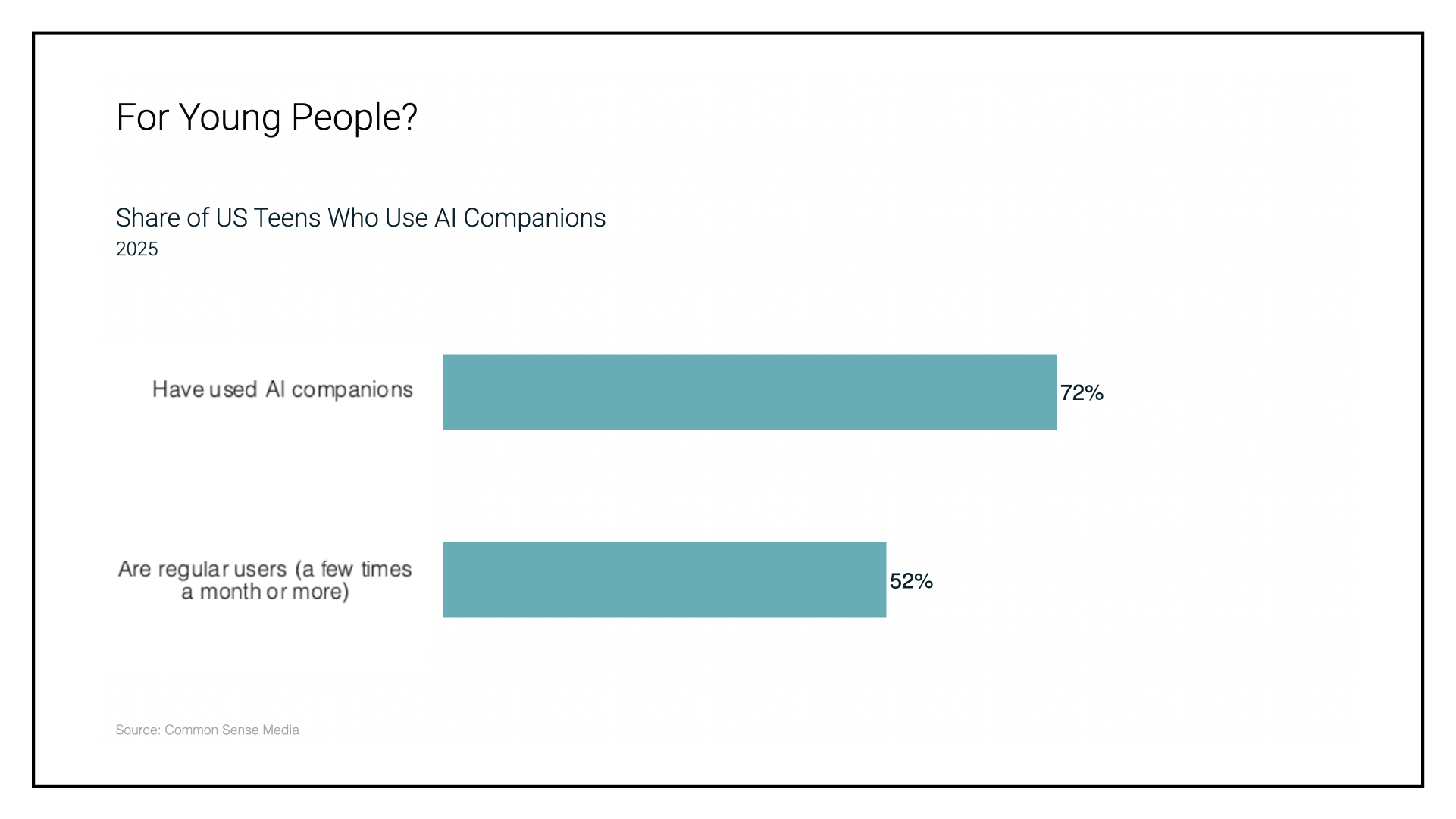
There’s a use case for AI companions, but it’s uncomfortable — a sad story about lonely old people. One-quarter of Americans 65 and up are socially isolated, increasing their risk of stroke and dementia by 30% and 50%, respectively. The share of the population aged 65 and older is projected to reach 21% by the end of the decade. In one year-long analysis of older Americans living alone, 95% of participants said bots reduced loneliness. If synthetic relationships can make older people less lonely and stave off dementia, that’s great.
The problem? Young people aren’t developing the skills to navigate life’s hardest / most rewarding thing: relationships. Google search volume for “how to make friends” has increased 5x since 2004, while the share of Americans who say they have no close friends increased 4x from 1990 to 2021.
I believe synthetic companions are the next opioid crisis for young people. On Character.ai, 79% of the users are under 35; the average session is 93 minutes. In any given week on ChatGPT, 560,000 people show signs of mania or psychosis, while 1.2 million people engage in conversations that indicate they have a plan to self-harm. Unfortunately, Congress is The Walking Dead meets The Golden Girls. They see the danger from synthetic relationships about as clearly as the propaganda threat posed by TikTok.
The ‘College Is Dead’ Narrative Collapses
Some of the most successful people of our age are college dropouts — Mark Zuckerberg, Larry Ellison, Oprah. You should assume your son is not Oprah. Despite the noise about employers removing degree requirements, the share of workers without a degree increased only 3.5% between 2019 and 2024, while 45% of all firms made no changes to their hiring practices. In pure economic terms, the median household income for a college graduate is more than 2x what is for someone without a degree. College graduates see better nonfinancial outcomes, too, in the form of lower rates of obesity, divorce, and suicide. On average, they also live six years longer.
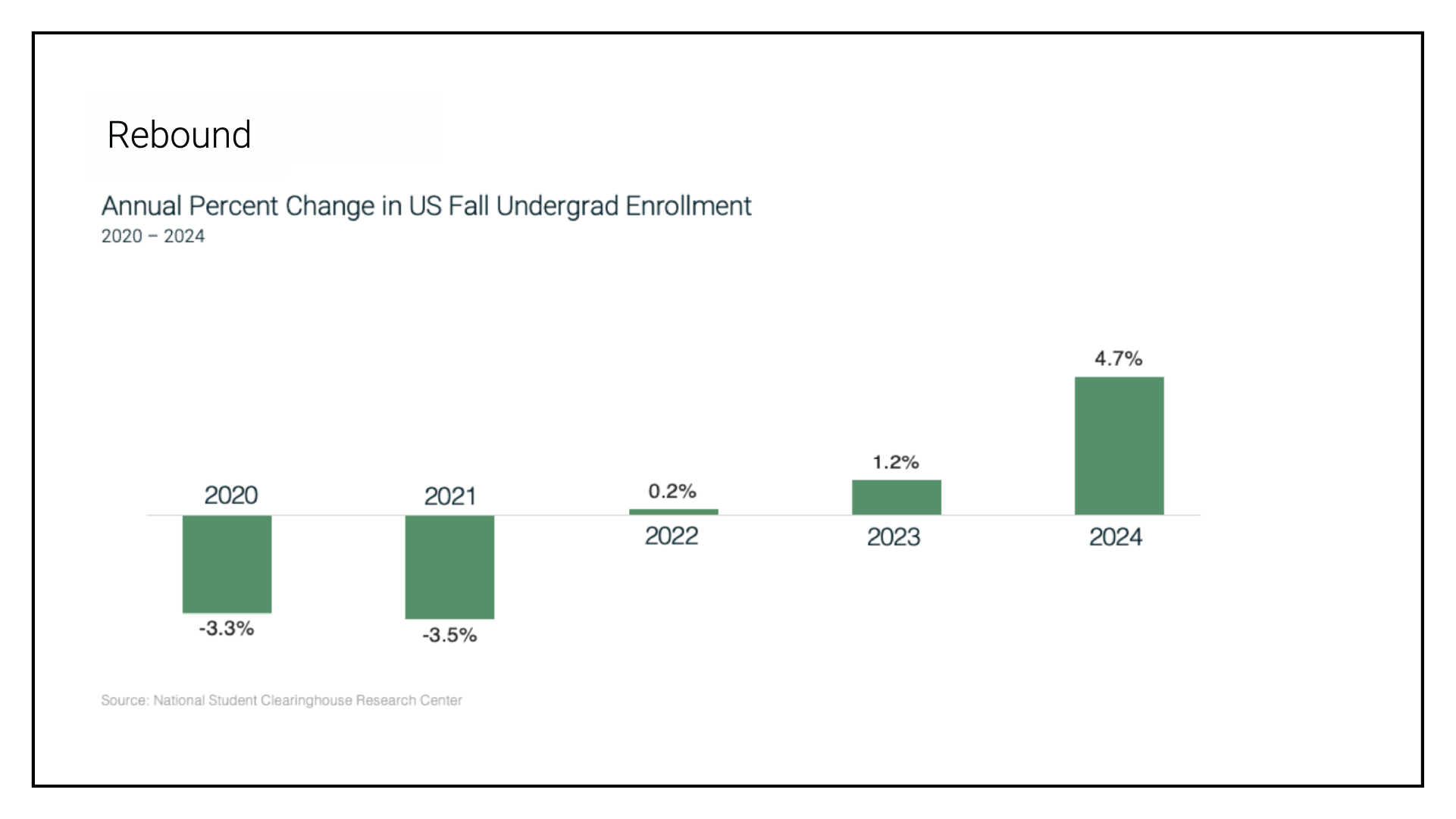
After declining during the pandemic, enrollment has rebounded. The issue isn’t value add, but value (i.e., cost). Adjusted for inflation, tuition rose 53% and 32% at public and private schools, respectively, between 2000 and 2025. Why? A: My industry is corrupt. We artificially sequester supply so we can raise tuition faster than inflation. Faculty, administrators, and alumni are drunk on exclusivity. We’ve lost the script and begun believing we’re luxury goods, not educators.
Finally, Team Scotland will reach the semifinals of the World Cup on the back of a Pele-like performance from Scott McTominay. Hey … I can dream.
The best way to predict the future is to make it. I hope the New Year brings you the perspective and presence of mind to realize that, if you live in America, are healthy, and have people who let you love them completely, 2026 will be the best year of your life.
Life is so rich,

P.S. Start the year off with a New York Times bestseller. (Flex.) Notes on Being a Man is available in all the usual places.
9 Comments
Need more Scott in your life?
The Prof G Markets Pod now has a newsletter edition. Sign up here to receive it every Monday. What a thrill.


Thank you Scott! Your echo of truth and reason motivates my core. With twin 31young men•••••I am constantly sending them the posts you are providing••••••keep this shit up!
In the spirit to inspire a conversation that crafts better solutions & better discussions online, I think everyone who comments to this post should be required to list their own 2026 predictions
Predictions are like opinions are like assholes.
Here are some of mine:
The Clinton depositions for January 2026 will not happen.
I’m leaning toward a medical excuse.
Cough, cough, I’m sick and can’t come into work type of excuse.
We’ll see news stories of frail Clintons with medical equipment.
I would not be surprised if the Clintons inject themselves with AIDS to get out of those depositions.
CCP collapse
US economy collapse (maybe as early as the first half of 2026)
Trump will eliminate federal income tax.
If he does this right before the midterms it’s game over for the Democrats.
Trump will be the Disclosure President (Not necessarily in 2026, but sometime before the end of his terms)
Loved the presentation on 5th December, I got out of bed at 4am to watch it.
Regarding this – The greatest AI hallucination yet is the assumption that in the next few years we’re going to build anywhere near the required grid and power capacity. OpenAI needs 20% of current U.S. electric capacity.
The smart tech companies are building data centres in countries that have cheap clean solar energy in places where there is heaps of water. Amazon built in Australia’s Northern Territory where the land is cheap, your average farm is the size of France, the rainfall is at least 5 metres a year and thanks to being in the tropics, the sun shines very hot. Solar panels and batteries are doing the job perfectly and very cheaply.
“Musk Bids for Warner Bros. Discovery/CNN … Or Another Iconic Media Firm”
We did not discuss this 2025 prediction. Did it or any other TDS predictions come true the last few years like Biden wins reelection and Trump locked up?
To Scott Galloway: You diagnose the fire, but you assume we must burn.
You see the Algebra of Wealth (Accumulation). We see the Architecture of Grace (Regeneration). You predict the crash; we are engineering the lifeboat.
1. The AI Energy Crisis: You see data centers crashing the grid. We see the solution: The Zero-Entropy Loop. We treat servers as furnaces, not vampires. At 1 Lake Dr., we capture compute heat to warm homes and grow food. The future isn’t just chips; it’s metabolic engines.
2. Loneliness: You warn of synthetic relationships. We agree. The cure isn’t regulation; it’s Dignified Density. We replace the digital void with the shared table. Young men don’t need AI girlfriends; they need Shepherding—responsibility for life greater than themselves.
3. Finance: You call prediction markets a casino. We counter with Covenantal Finance. We don’t bet on the future; we fund it. Capital must flow like water to irrigate the soil, not stack chips on the Titanic.
4. Space: You look to Mars. We look to Suburbia. Escaping Earth is abandonment. The frontier isn’t space; it’s the quarter-acre lot. We are terraforming the ground beneath our feet.
5. Education: The university sells credentials. We teach Character. The Seven Skills of Scripture—from Breath to Logic—prepare the Human OS for the AI age.
We do not predict the end. We engineer The Turn. While Titans build faster engines, we are building the steering wheel.
Starlink is great for airplanes, ships at sea and isolated cabins. I’d be interested in your take on how competitive it is vs. fiber and 5G and whether the markets it’s great in are large enough to support the launch cost.
I still don’t understand how prediction markets are legal.
Assuming even half your predictions come true, and I think most have an excellent chance of being accurate, I guess we’ll watch the world, or at least the US, plunge into total darkness
I do recall your prediction around 2016 that Amazon would not survive. I hope you and your family have a fantastic holiday. Jay (formerly w Marriott)