

Slow Dopa
Slow Dopa

Audio Recording by Notes on Being a Man is out now. Learn more about your ad choices. Visit podcastchoices.com/adchoices
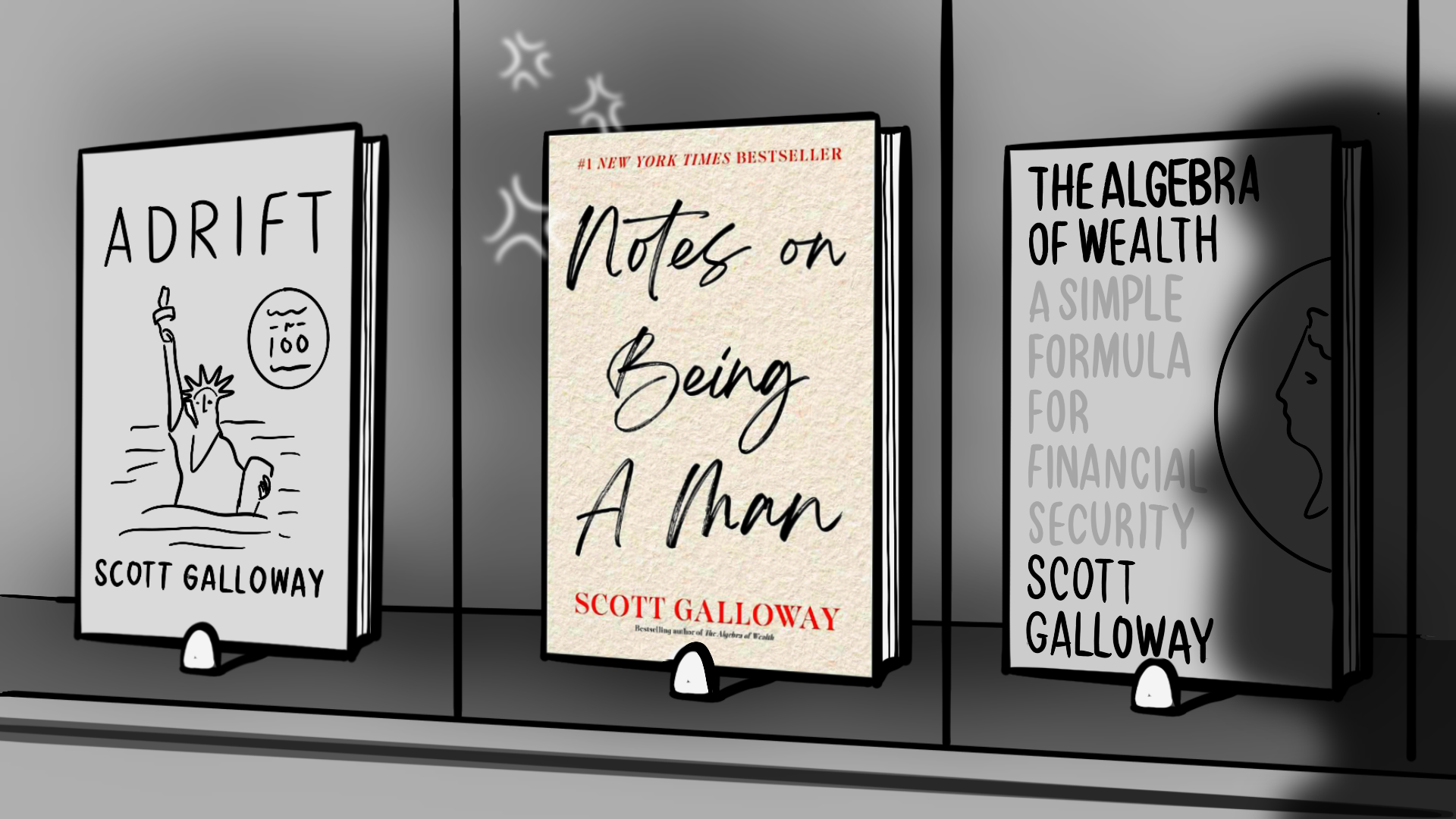
“Buy now, pay later” is booming. This past holiday season, American consumers were expected to spend a record $20 billion using these services, in many cases snapping up electronics, clothes, and other products they otherwise couldn’t afford. But the BNPL mentality extends far beyond retail. Getting a dopa hit today and dealing with the consequences in the future has become the default mindset for millions of Americans. We’re raising a generation of addicts, as tech, gambling, finance, and other companies tap into our constant craving for now. We need to help young men in particular understand the value of slow, compounding gains. Not just the ones that produce financial returns but the kind that pay dividends in your family, friendships, and career — the rewards that really matter. In my new book, Notes on Being a Man, I call this Slowpa. Below is an excerpt.
_____________
The Most Powerful Force in the Universe
Growing up, I was drawn to novel, crazy experiences — in other words, attracted to doing a wide variety of insanely stupid shit. So were most of my (male) friends. At age 8 or 9, we would build ramps and jump with our bikes over one another’s motionless bodies. I would skateboard down Wilshire Boulevard, not on the elbow or the sidewalk, but on the actual boulevard. The third and fourth grades of our school looked like an ER waiting room — casts, bandages, crutches, eye patches.
Then I got older, my incredible maturity obvious to everyone. In high school, I distinctly remember deciding not to study for the upcoming SATs — too boring and time-consuming. That same year, my mom had to sign a release so I could play on the high school baseball team, but I forgot to give it to her, which meant I wasn’t allowed to play the first game and was eventually cut from the squad.
At UCLA, after my freshman year, I applied immediately for financial aid for the next year. I got a shit-ton, too, including Pell Grants. Then, a year later, aware that my junior year was coming up, I decided not to apply for financial aid, and, you know, whatever, take my chances.
Incredibly fucking stupid.
Other highlights from that era include never checking my car’s oil level until the dashboard screamed with yellow and red symbols alerting me that either the engine was about to explode or a comet had just collided with Earth. When this car was later towed to a city pound — encumbered under the weight of dozens of unpaid parking tickets — I thought, Fuck it, and never saw it again. Later, during my first real job, at Morgan Stanley, I was given the profoundly complex task of hand-delivering a proposal to a client. All I had to do was board an a.m. flight to San Francisco. I missed the flight.
Among other things, the brain’s prefrontal cortex helps us get the easy stuff right. Until 25, I got more than my fair share of easy stuff wrong, didn’t take responsibility, most of the time had no ability to plan, and continually messed up.
A tendency for risk-taking, mixed with poor impulse control, renders many young men helpless against a torrent of on-demand dopamine provided by the world’s richest tech companies and makes maturity a hard sell for teen and college-age boys — at least, relative to girls and young women. You almost never hear about people named Laura and Elena eating Tide Pods or blowing off their final exams. Why?
Male and female brains are more than 99% identical. There are variations, though. Men have more than double the brain space and processing power devoted to sexual drive. The male amygdala, home to fear, anger, and aggression, contains testosterone receptors that make males lose their cool faster and more easily. But where the male and female brains diverge most sharply is in their development, especially during adolescence. By age 14 to 16, male and female brains have stopped growing, with the exception of the prefrontal cortex, or PFC. Girls attain “peak values of brain volumes” earlier than boys do — Latin for “girls get their shit together way sooner.” Basically, the female PFC matures up to two years before the male PFC does.
The PFC is the grown-up in the room, the CEO. The brain is a network; e.g., overlap is a feature, not a bug. No single brain region governs one instinct. But science agrees that a healthy PFC regulates impulse control, decision-making, good judgment, reasonableness, emotional regulation, and planning/prioritizing between the stuff you have to do versus the stuff you’d rather be doing (getting drunk or high, rewatching Family Guy).
At the start of puberty, boys are basically force-marinated in testosterone. T makes them more monosyllabic than usual. Their socializing, never strong to begin with, narrows to sports/physical activity, depending on the kid, and thinking about sex. With their thicker, denser muscles and deeper voices, boys may look impressive and imposing, but behind the forehead, girls have lapped them. By 14 to 15, girls have greater volume and complexity in their PFCs and thus, theoretically, more maturity than boys. They’re better decision-makers and problem-solvers. They can overcome their brains’ reward circuits with a good counterargument or simply by deploying common sense.
The male PFC catches up around age 25, when many young men get their act together. Until then, they’re at a huge maturity disadvantage.
Waging war against a young man’s unformed PFC is like trying to wean a kid off salty snacks in favor of carrots and radishes. With my two boys, I do my best to illustrate the differences between the feverish, relentless dopa hits they get from TikTok and Instagram versus the slower, incremental results that are more valuable and satisfying from reading, working out, or spending time outside — slow dopa, or “Slowpa,” as I call it. If tech dopa hits are like shoving handfuls of Cheetos or Snickers into your mouth — i.e., they don’t fill you up, you hate yourself, and you want more — Slowpa is more like the salad you order that makes you feel healthier for a week. When my boys were little, we spent a fortune on Legos. If Slowpa ever hires a celebrity spokesperson, it should be Lego. Building a model out of 1,300 pieces of lightly hued plastic requires one to two hours daily, plus focus, but then two weeks later you have a really cool Millennium Falcon or Blacktron Renegade to hang in your bedroom. On weekends, Alec, my oldest, likes cooking with his mom. That’s an hour spent chopping, measuring, grating, kneading, basting, followed by another hour watching the oven. Dinner, but also Slowpa.
Children today are overprotected in the real world and under-protected online — an observation made by my NYU colleague Jonathan Haidt. At age 13, I flew from LAX alone to visit my dad and stepmom in Ohio. Looking back, the 1970s may seem lax, negligent, and flaky, but parents were onto something. Nowadays, if, say, my 14-year-old son wants to have a party, no, I won’t go out and score a case of tequila for him, but I won’t hover, snoop, or get in the way of his plans, either.
I recently showed both boys a TikTok by some ex-finance guy. What he said was basic, obvious, and great: Success comes when you put in small, consistent amounts of effort, every day and every week; it doesn’t matter whether you’re investing, filming two minutes of video content, or lifting dumbbells. Small, deliberate, regular efforts accumulate and in time pay off. In other words, the most powerful force in the universe — Einstein knew this — is compound interest. Aka, Slowpa.
Life is so rich,

P.S. Notes on Being a Man was published in November and is available in all the usual places.
30 Comments

Scott Galloway
Professor of Marketing at NYU Stern School of Business and host of the Prof G and Pivot Podcasts. For Scott Galloway speaking inquiries, email speaking@profgmedia.com


Has it occurred to Scott that there are incentives for young men to act like dumb-asses?
You know what makes some boys more successful with girls? Being loud, talkative, risk-taking, and a little bit pushy. Those types of boys are more likely to end up with a partner and have children. The quiet studious A-student boy who behaves like a studious girl is more likely to end up alone. Boys have to compete for girls – like like males of all species do, and competing for girls means standing out from the crowd, making yourself noticed. Scott can praise the studious girls all he wants, but that doesn’t mean that same behavior is rewarded in boys.
The incentives for boys are to act like risk-taking dumb-asses. Generations of women chose the loud, obnoxious boys over the quiet studious boys. Also, quiet and studious often gets coded as “gay” by women – which is a complete turn-off. Boys’ bad behaviors are genetically selected for. And through life experiences, boys learned that it’s the best way to behave in order to have a dating life.
…
… It’s great that he’s teaching boys to save and invest for the future, but he’s not going to be rich in his prime dating years. Sure, maybe he’ll be rich in his 50s, but by then he’s past his dating and child-raising age. Sadly, it’s important for boys to act like jackasses so that women will notice them. I know plenty of boys who were juvenile delinquents who have four or five kids now. The studious save-and-invest for the future boy is more likely to end up with money in his 50s, but also less likely to have a family and kids. From a relationship standpoint, it’s WAYYYY more important for boys to stand-out in his teens, 20s, and 30s than to be rich in his 50s and 60s.
Charlie Munger said “Show me the incentive, and I’ll show you the outcome” and it applies here.
This also applies to earlier podcasts, where Scott complains about young men making big bets on crypto and betting apps, rather than slow stock market gains. Yes, I agree with him, but, from a relationship standpoint, a man who gets rich in his 20s is far better off than a man who gets rich in his 50s or 60s.
The incentives for boys mating and dating success is in direct opposition to the traits that makes him a rich, successful, responsible older man. People have kids with the loud dumb-ass guy, and then express confusion over why their boys are loud dumb-asses.
Unless we can change how young women choose young men, this isn’t going to change.
A great personal throwback:
In 1994, at the age of 13, I flew alone from Adana, a Mediterranean city in Turkey, to New York.
It was my very first flight ever!
I’ve always been thankful to my dad for making it possible.
As a society, we’ve been emphasizing the importance of “delayed gratification”, while the partnership of teachers/health care providers/big Pharma have been pushing psychotropic drugs to obtain “immediate gratification” in the classroom with regard to grades.
The long term affect is the normalization of mental illness in terms of men in their mid 30’s and later who are riddled with depression, anxiety and addiction to poor social behaviors.
As a society, we’ve been emphasizing the importance of “delayed gratification”, while the partnership of teachers/health care providers/big Pharma have been pushing psychotropic drugs to obtain “immediate gratification” in the classroom with regard to grades.
The long term affect is the normalization of mental illness in terms of men in their mid 30’s and later who are riddled with depression, anxiety and addiction to poor social behaviors.
At 16, I took my son to rock concerts with his friends. At 17, I let him go by himself with friends. He got ahold of a boatload of drugs and his brain went haywire. He developed disorganized schizophrenia. At 38 his judgement is limited and his ability to solve simple problems is limited, functioning at 80%. He is a great kid. There is no cure. We are both paying the price.
Excellent article and excerpt! I am recommending your book to my son-in-law who has two dopamine addicted sons. Thank you.
The claim that Scott “invented” the concept of slopa (google/AI says this) is not accurate. Tom Peters, 30+ years ago stated that change comes not from big dramatic acts but from small incremental steps. And I doubt he was the first. Little is truly new, most is an adaptation, evolution of the existing. Better for one’s credibility to say so.
It’s been a long time since I commented on anyone’s post, but I couldn’t resist this time. Not to be dismissive of your message, but you cracked me up with “…we would build ramps and jump with our bikes over one another’s motionless bodies.” That was us. I was fortunate to grow up in a neighborhood with a lot of same-age boys and the only rule was to be home by dinner time. And talk about stupid? BB gun wars, dirt clod fights, chopping anything down with a hatchet, wrist rockets + any type of glass (why was the sound of breaking glass so exciting?), dodging yard darts, throwing firecrackers and pocket knives, making spears, burning shit with a magnifying glass (always fascinated with fire). Sutured up six times. Never seemed to learn a lesson, even knowing I’d have to face the physical consequences doled out by my short-tempered Marine Corp father. Fortunately no one lost an eye, a limb or worse. My wife knew me as a teen, but wouldn’t marry me until I was 26. Wonder why? Thanks for the memories and the laugh. I’ll go get your book.
Chris, I am 71 and can relate to everything you said. I was in a family of 7 siblings, very modest upbringing yet never felt I didn’t have what I needed. Galloway is too funny and normally right on with his assessments.
We are chimps, not bonobos.Structurally developed to survive. But there is a contradiction between living for today or for tomorrow.
Thanks Scott for another insightful piece. I’m in my 70s and sometimes I lie awake at night and wonder, how the hell did I get to this age – I should have been dead before I reached 20. Like driving through the Holland tunnel home to Jersey, totally mind-altered after a – not sure how long, but really long, Grateful Dead show at the Fillmore. But even as crazy as I was, I had this burning desire to get into college and by the time I was 21 I figured out following the Dead wasn’t gonna get me there so I went in the new all-volunteer post Vietnam Army to get the GI bill. That decision got me all the way through undergrad and grad school with degrees in fine arts, history and political economy. I think being on my own, running out of money and facing homelessness at such an early age must have advanced my PFC a few years out of necessity. How else was I gonna continue to get to Dead shows? Really enjoy your writing and podcasts – you (and Smerconish) really helped shine a more public light on one of the more troubling aspects of our modern culture – the crisis facing young men.
Oh, so true and so on target!
Once again, thanks for your observations and more important for your willingness to say what has to be said in such a concise, convincing, and genuinely concerned manner. We are the sum of our life experiences, and our children haven’t had to face the barriers we did, like working our way through high school and college to earn spending money. They are a lot better off in some respects, and not so better off in others.
Thanks for the insights, and thanks for sharing. Most important: Have a happy and successful New Year, and know that there are a lot of us out here who genuinely appreciate what you say and what you do.
The book is terrific. Young men need mentors–real live human beings–not anything online. And involving young men (and women, too) in volunteerism is a big step toward breaking down the silos we are all living in. California is making great strides in that direction: californiavolunteers.ca.gov
Enlightening, Scott! Wish this analysis had been available when I was a teen and in my 20’s! Would have helped with a lot of important decisions I made! Thanks!
What would your approach be to screen time in a 14yo boy? The so called social media ban did not work in Australia, total failure, the AI bot thought he was 30! So short of daily battles and conflict over screen time and wanting more, and a lack of motivation to do much for himself (esp when the parent patches up/ fills the gaps when he doesn’t pick up after himself or contribute to the household) ? How would you approach this for a 14yo boy today?
Always enjoy your Friday email Scott. Signed up for them during the height of covid in South Africa. As you say ever Friday, Life is indeed so Rich. This richness speaks to a depth and nuance that I feel you don’t cover adequately in much of your analysis. Massive kudos to you for even attempting to tackle many of these very complex subjects and conversations.
As a 50 year old black father of 4 who grew up during apartheid in South Africa and can also acknowledge that I had a privileged upbringing relative to my peers, I understand and continue to live through nuance and complexity.
Whether its finance, geo-politics, family or education, I appreciate your Friday missives because they truly are a fantastic mental gymnastics session (meant as an opportunity to think about a subject in a way I perhaps hadn’t thought of before and how I can possibly extend your take to my lived experience).
Keep challenging us and I look forward to your take on what’s ahead for 2026. Life is indeed so rich and you certainly add to that richness every Friday.
Be blessed and have an awesome 2026.
Tsolo
I confess that I’ve been hooked on “Galloway” since Realtime (like one of your other commenters). I’ve subscribed to for a bit and actually read “Notes” (which, given the weight on autobiography, might well have been entitled, “Notes on Being the Man I Am”…?….). Just needed to write and celebrate your “slow dopa” (!)….love it…
After an earnest start on my SAT exam I decided to finish with a zig-zag pattern. Never made the leap from Jr College to a University either. Trashed my Schwinn 10 speed on a downhill run from Mount Wilson (above Pasadena, Ca). How about a “do-over”?
I enjoy reading “cousin Scott’s” irreverent, insightful takes on human behavior, which, of course, translates into how we conduct business. It’s cathartic to see and understand why we sometimes do stupid things, even though we’d like to consider ourselves as smart 🙂
Your slow-pamine is my hope-amine, Scott.
Why take child rearing advice from someone whose childhood and young adulthood, by their own admission, was a chaotic jug fuck in a broken family absent a strong male influence? Translation: your advice is really bad.
My parents were both US Army WWII vets. My father was a career soldier. He was a tough SOB and my mother was a even tougher. Irish Catholic.
I was educated at Catholic schools whereat the nuns — Sisters of Charity and Mercy — were taskmasters who made Ranger School seem tame. Getting whacked with a ruler was not even a noteworthy thing.
I went to a military academy at the height of the Vietnam War and studied engineering.
There was never ever any confusion as to what was expected of us or what we did. Most of us had a first job that entailed command of 50 riflemen — or in my case combat engineers who are just infantry who build stuff and blow stuff up. We went to Airborne and Ranger Schools at 22.
Your experience is not “normal” and the advice you give is wildly unfounded in reality.
You need to broaden your experience. Just consider there are other experiences that may be more mainstream.
God bless us all and Happy New Year.
I have a different point of view: When someone can analyze, reflect upon, and learn from a childhood and young adulthood that was chaotic and fatherless, and apply relevant research, I want to know what he/she has to share. Scott Galloway consistently explains how to take the abnormal and render it normal. I am grateful for his work.
Scott – this is my favorite post all year and resonates deeply as a parent and middle school teacher. (29 years). Keep rooting for the young men and the success they can have within school and in the ‘real’ world. One of my new classes this year – some boys are talkative/struggle w focus….until I share I used to ski without a helmet and did an endo on my mtn. bike. Oooohs and Aaaahs and appreciative head nods from the guys. “She gets me!”
Scott you and I are similar age. In my youth my prized possession was a Schwinn Sting Ray I got for my 5th Birthday. I ride it everywhere until I was 14.
Fast forward 40 years. I met and married my second wife who is from Poland. She is much younger (winning!). We travel often and at least once a year to see her family. I have bought land in the town she grew up in. The dream of building a house for her parents. I do what I can to help out her family. They deserve it.
The cousins refer to me as the rich uncle. We travel to other countries around Europe. Give a person a different perspective.
Recently saw a former grade school classmate. She said; “where did you get so much money? You travel to all these exotic places. You were such a fuck up in school.”
My response “I work, I have worked very hard and I invested.”
Her; “But, how did you learn how this stuff?
Me; school, mentors, life experiences.
Her; Mouth still hanging open
She was still judging me by the person she knew 45 years ago. I am clearly not that person.
Per usual, spot on. But why not share some sage advice with your sons from a book or “slow” media v. TikTok? It kinda feeds into the opposite of what you are suggesting.
Scott, I always appreciate your views and knowledge about finance and the markets. But when you wade into the pop analysis of teen development, I find your thinking a bit trite and superficial. The idea that our brains somehow become mature at 25 is pure nonsense. Looking for sex differences is even more shaky. We all learn from our mistakes and that is true way before 25 and it continues as well for both men and women. Adolescence is a great period life that we mostly manage to learn from. Let’s not pathologize it.
I began following Scott after I first saw him on Bill Maher’s show, Realtime. He continues to provide priceless advice and keen insight about gender, finance and politics. He’s one of the few people with whom I’d love to grab a beer.
Preachin’ to the choir, Scott.
Football and motorcycles were very rough on the rig.
But the kaizen is the lord of Slowpa.
We both made it with more than a little luck involved I’d venture.
HNY.
Scott,
My dear brother,
You’re a freaking HERO to me SIR! Keep up your fine work! That’s exactly what a real man does in my humble opinion. He owns his mistakes and understands that in the wide world; and a long life; that yes; idiotic things are done. Only small men don’t realize it. I recently disowned a decade long friend due to his lack of humility! Again my dear hero and brother; keep up your very fine work!
Sincerely and admiringly,
Stephen De Falco